
Optimizing the Path to Purchase: A Data-Driven Navigation Overhaul
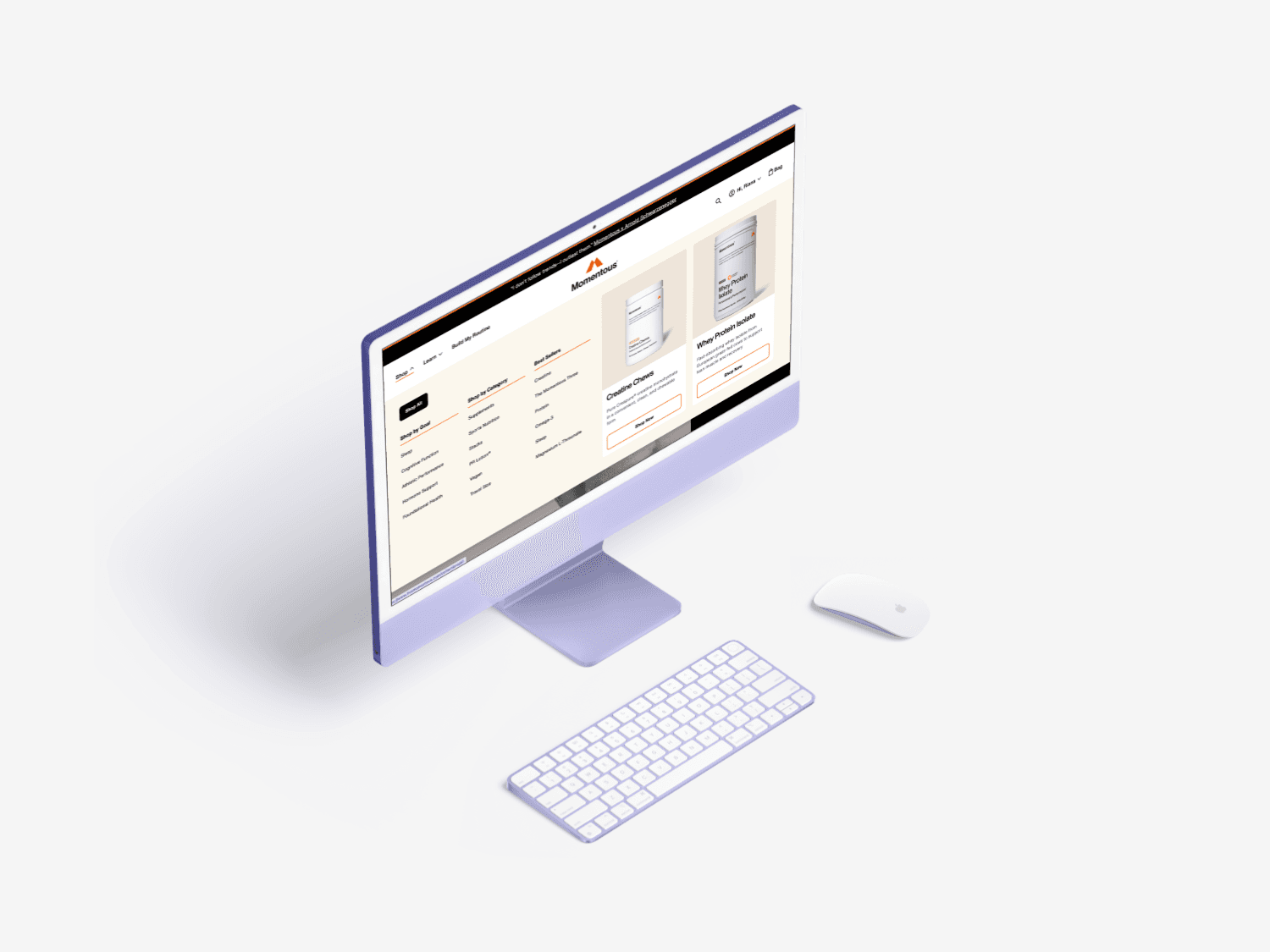
The Challenge: Identifying Friction Through Data Before designing, I conducted a comprehensive "Discovery Sprint" to audit the existing user journey. Using Microsoft Clarity and Shopify Analytics, I identified several high-friction "villains" in the mobile and desktop experience:
The "Dead Click" Phenomenon: 12.7% of all sessions experienced dead clicks—a high friction indicator caused by non-clickable UI elements that users expected to be interactive. The primary culprits were non-clickable categorical labels and the search icon.
The Quick Back Trap: A 25.61% Mobile Quick Back Rate indicated that the navigation was not supporting the user journey, causing them to immediately retreat after clicking.
Path-to-Purchase Friction: The Minimum Click Count (MCC) audit revealed it took an average of 3.32 taps for mobile users to reach top-tier products.
Accessibility Failures: The desktop menu was "Hover-Only," causing a WCAG SC 1.4.13 failure and making it inaccessible for keyboard-only or motor-impaired users.
The Strategy: Evidence-Based UX Hypotheses I developed a "Execution Sprint" focused on flattening the architecture and aligning the UI with industry-standard e-commerce conventions:
Fitt’s Law Optimization: I hypothesized that making the entire search bar container clickable (rather than just the icon) would reduce rage clicks and increase search-initiated sessions.
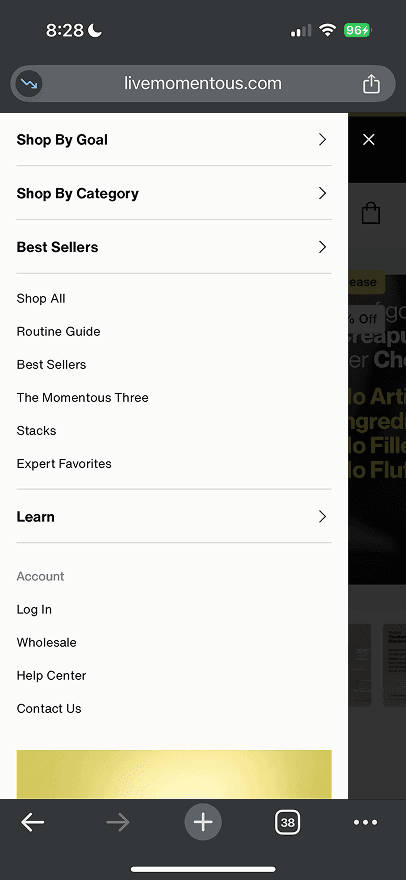
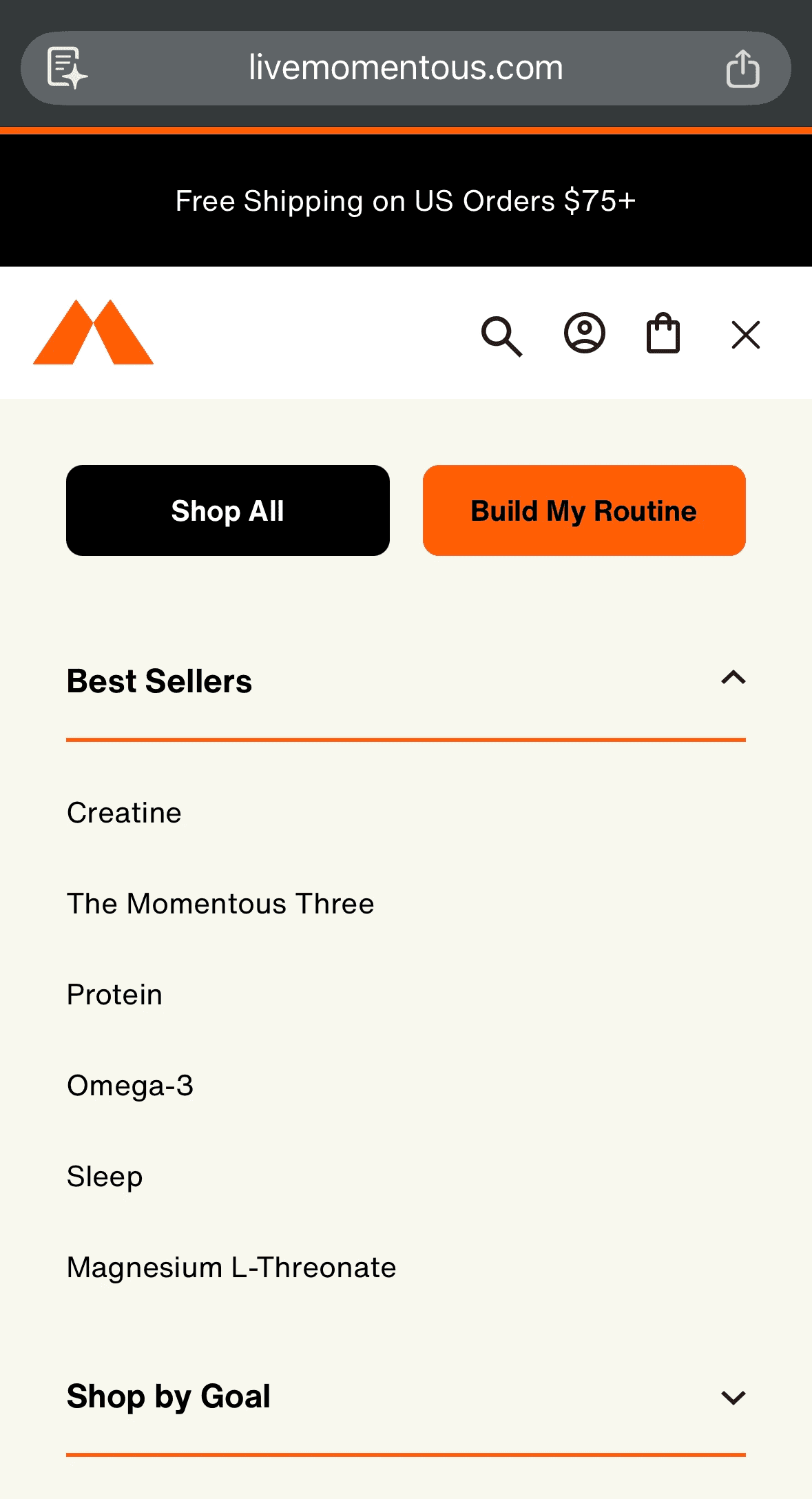
Flattening Mobile IA: Redesigned the mobile navigation to replace deep, multi-level nesting with flat, touch-optimized accordions. My goal was to decrease the MCC by over 40%, bringing it from 3.32 taps down to ≤ 2 taps.
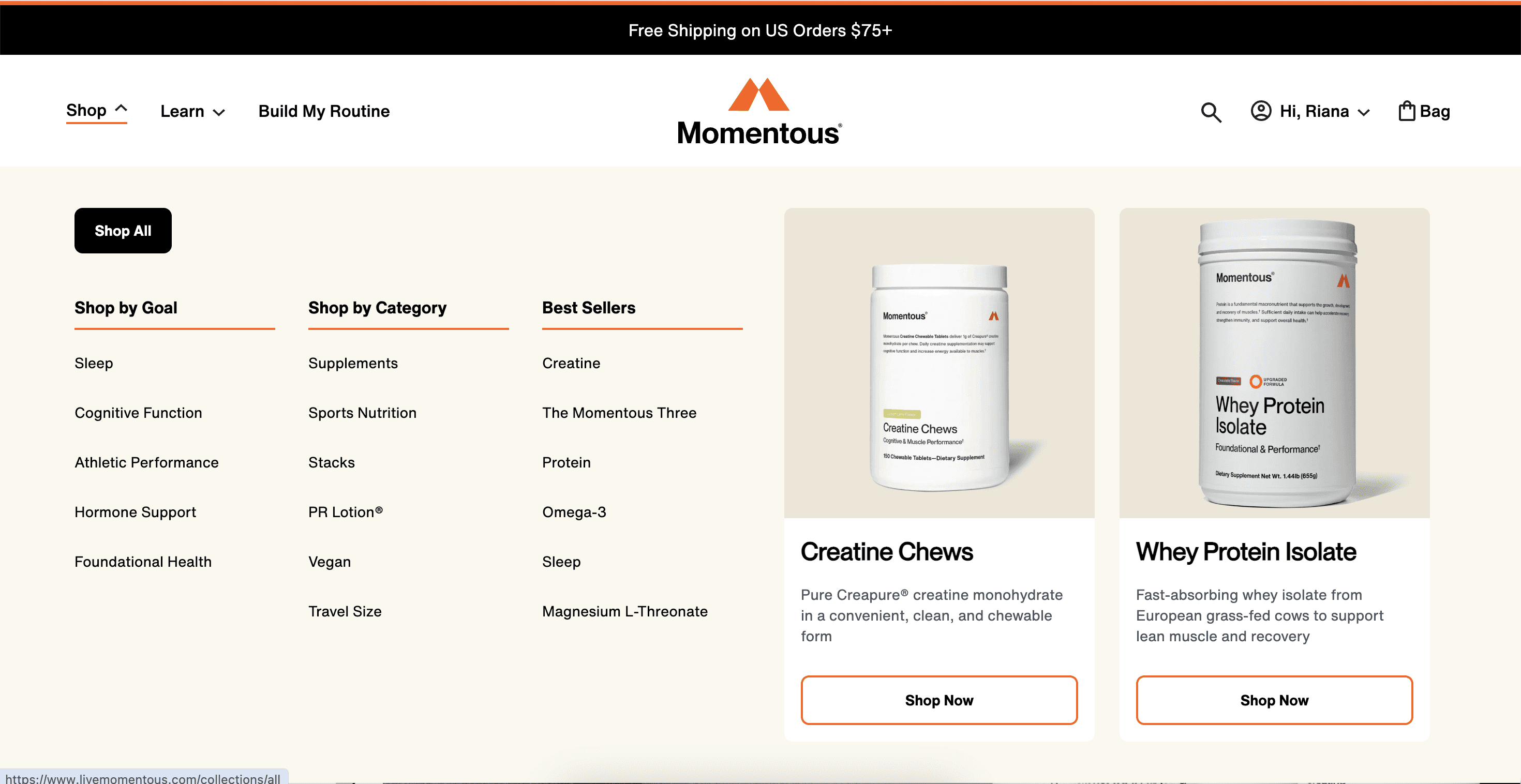
Information Architecture (IA): Validated a new "Shop by Goal" vs. "Shop by Category" hierarchy to provide a better "Scent of Information" and lower the 63.28% Collection Page exit rate.
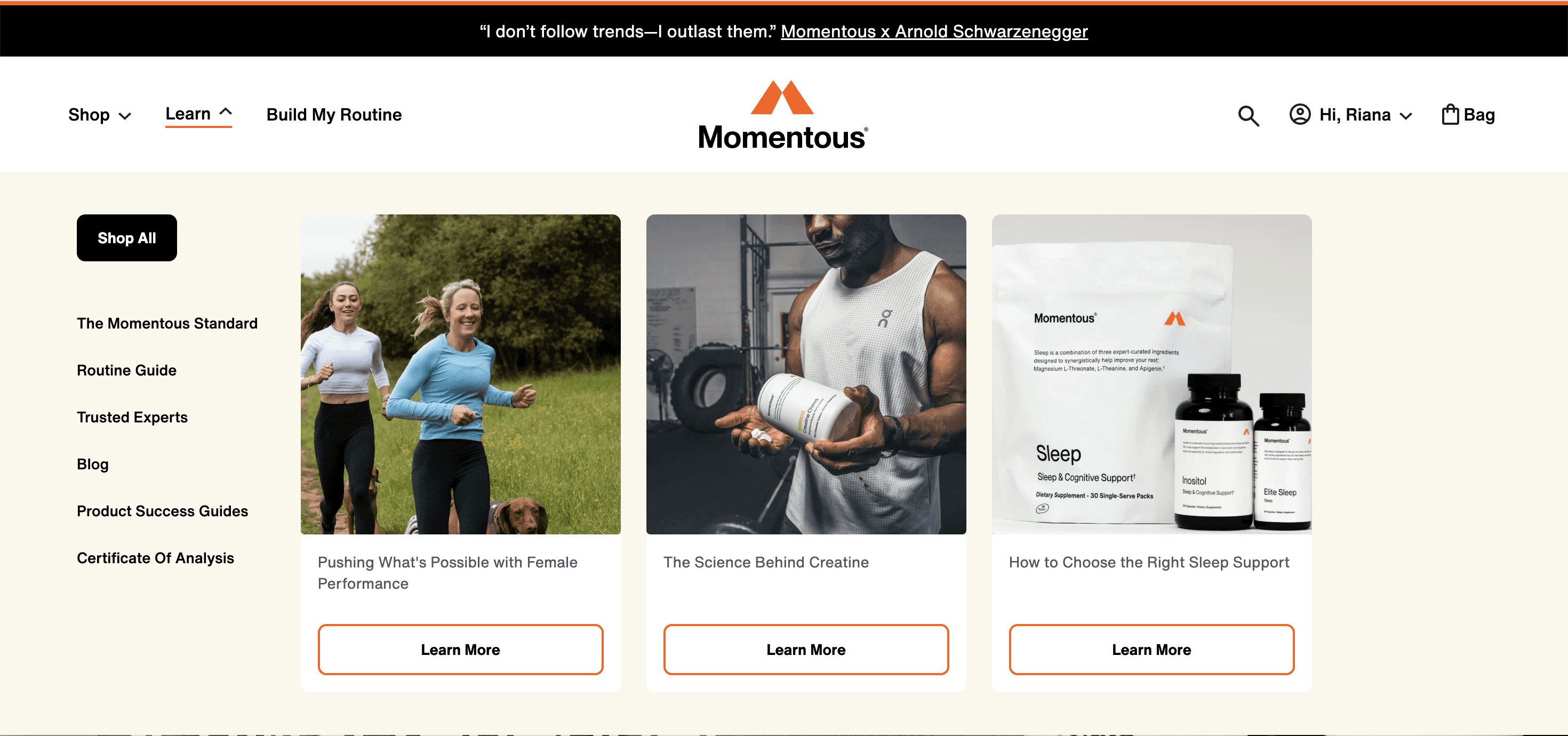
Accessibility Compliance: Implemented a "Click-to-Open" model to ensure the menu persists for keyboard users while maintaining hover-primary benefits for desktop users.\
The Result
By addressing these specific friction points, the redesign moved the needle significantly:
100% Rollout due to immediate success.
+5.45% Conversion Rate Lift
+3.03% Revenue Per Visitor.
+3% Profit Per Visitor
Project Details
Client: Momentous Role: UX / Web Designer Project Start: October 2025 Project End: December 2025